Rails, Rates, and Returns: What Railroad Contract Terms Tell You About a Coal Stock Before the Quarterly Numbers Arrive
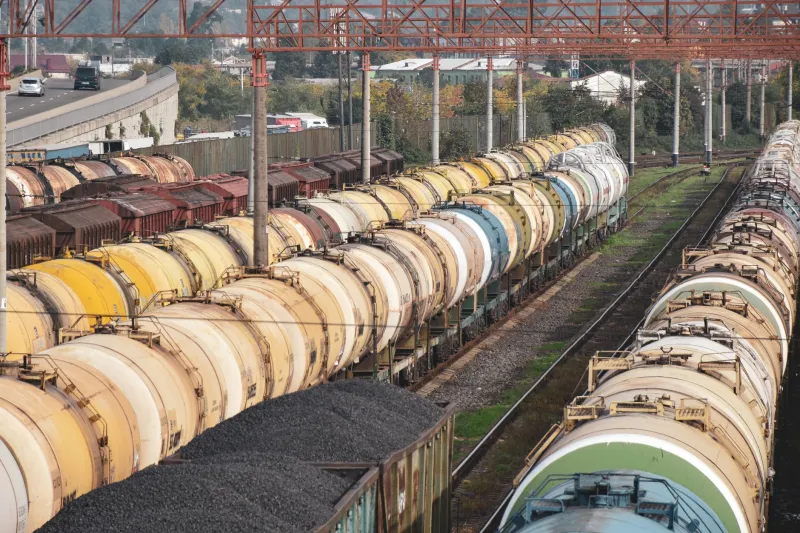
Most investors evaluating coal equities gravitate toward the obvious metrics: realized price per ton, production volume, cash cost per unit, and EBITDA margins. These figures are important, but they are also the last place where competitive advantage or structural weakness reveals itself. By the time a problem surfaces in earnings, the damage is frequently already done. Sophisticated investors who want an earlier read on a coal producer's financial trajectory would do well to examine one of the most underappreciated variables in the sector: railroad contract terms.
Freight costs are not a footnote. For many U.S. coal producers, transportation expenses represent the single largest variable cost component after labor, often consuming between 20 and 40 percent of the total cost stack depending on the mine's location and destination market. Yet the specific terms governing those freight arrangements—the rates, the duration, the volume commitments, and the penalty structures—receive comparatively little attention from retail investors and even some institutional analysts. That oversight creates an informational edge for those willing to do the reading.
The Captive Rail Problem and Why It Matters
Not all coal mines enjoy equal access to transportation infrastructure. A significant number of U.S. coal operations are what industry participants call "captive shippers"—producers whose geographic position limits them to a single Class I railroad with no practical alternative routing. In these situations, the mine operator has virtually no negotiating leverage. The railroad knows it, and the contract terms reflect that reality.
Captive rail relationships are particularly prevalent in Central Appalachia and certain portions of the Powder River Basin, where the physical terrain or the absence of competing carriers leaves producers dependent on a single line. When reviewing SEC filings for any coal company, investors should identify whether the company's primary operations are served by one carrier or multiple carriers. A producer with access to competing railroads—or better yet, one with proximity to barge or truck alternatives—holds a structural advantage that will not appear anywhere on the income statement but will quietly protect margins across commodity price cycles.
The 10-K filing is the starting point. Look for the transportation and logistics sections, typically found within the business description or the risk factors. Companies are required to disclose material transportation agreements, and captive shipper status often surfaces either explicitly or through careful reading of the language describing rail dependencies.
Take-or-Pay Clauses: A Contractual Trap in Both Directions
Take-or-pay provisions deserve particular scrutiny. These clauses obligate a coal producer to either ship a minimum volume of coal over a specified period or pay a financial penalty for the shortfall. When production is running at capacity and demand is strong, these arrangements are largely benign. When markets soften, production disruptions occur, or a major utility customer reduces its offtake, take-or-pay commitments can transform a temporary revenue dip into a compounding cash flow problem.
The inverse also exists. Some contracts place minimum service obligations on the railroad rather than the shipper, guaranteeing car availability and transit times. These provisions favor the producer and can be a meaningful operational advantage, particularly for companies competing in export markets where timing and reliability at the port are critical to maintaining customer relationships.
Investors should search the notes to financial statements and any material contract exhibits filed with the SEC for references to minimum volume commitments, deficiency payments, or liquidated damages provisions. These terms are not always labeled obviously, and they sometimes appear in exhibits rather than the primary filing body. The effort required to locate them is precisely why they remain underexamined.
Class I Railroad Leverage and the Negotiating Imbalance
The U.S. freight rail network is dominated by a small number of Class I carriers—BNSF, CSX, Norfolk Southern, and Union Pacific among them. These are large, financially powerful organizations with substantial institutional leverage over their shipper customers, particularly in markets where competition between carriers is limited. Coal producers negotiating freight agreements with Class I railroads are, in most cases, negotiating from a position of relative weakness.
This imbalance tends to manifest in rate escalation clauses tied to inflation indices, limited liability provisions that cap railroad exposure in the event of service failures, and contract durations that may lock a producer into unfavorable rates for years at a time. When a coal company renews a long-term rail agreement, the terms of that renewal can meaningfully reset the company's cost structure in either direction. Investors monitoring contract expiration timelines—which are occasionally disclosed in filings or earnings call transcripts—can anticipate potential margin shifts before they appear in reported financials.
It is also worth noting that Surface Transportation Board proceedings and rate dispute filings are public record. When a coal producer has filed a complaint against a railroad or participated in a rate reasonableness proceeding, that information signals both the existence of a pricing dispute and the potential for future cost relief or continued friction. These proceedings are infrequently discussed in mainstream financial coverage but are accessible through the STB's public docket.
Where to Look and What to Prioritize
For investors conducting due diligence on coal equities, a structured approach to transportation analysis should include the following steps.
First, read the business section of the annual 10-K with specific attention to transportation infrastructure. Note whether the company identifies single-carrier dependency, and assess whether any alternative routing options are mentioned.
Second, examine the risk factors section for language related to freight rate increases, service disruptions, or contract renegotiation risk. Companies that devote substantial risk factor language to rail dependency are signaling that management views this as a material concern—a signal investors should take seriously.
Third, review the notes to financial statements for contractual obligations tables. These tables summarize future minimum payment obligations and can reveal the scale of take-or-pay commitments across multiple years.
Fourth, listen to earnings call transcripts with attention to management commentary on transportation costs. Executives at well-run coal companies will discuss freight as a margin lever, and their commentary often provides context that written disclosures do not.
Finally, compare freight cost per ton across peer companies operating in similar basins. Persistent freight cost disadvantages relative to peers are frequently traceable to contractual terms rather than operational inefficiency, and they tend to be durable rather than transient.
A Margin Variable That Deserves Front-Page Treatment
Coal investing rewards patience and analytical discipline. The investors who consistently outperform in this sector are those who look past the headline numbers and examine the structural factors that determine whether a producer can convert coal in the ground into cash in the bank. Railroad contract terms are among the most durable of those structural factors—slow to change, difficult to renegotiate quickly, and capable of compressing or expanding margins across multiple commodity price environments.
The earnings report tells you what happened. The rail contract tells you why, and sometimes, what is coming next. For investors serious about building a rigorous analytical framework around coal equities, the freight agreement deserves a place on the front page of the due diligence checklist—not buried at the back.