Priced for Extinction, Built for Profit: The Case for Thermal Coal's Valuation Gap
Priced for Extinction, Built for Profit: The Case for Thermal Coal's Valuation Gap
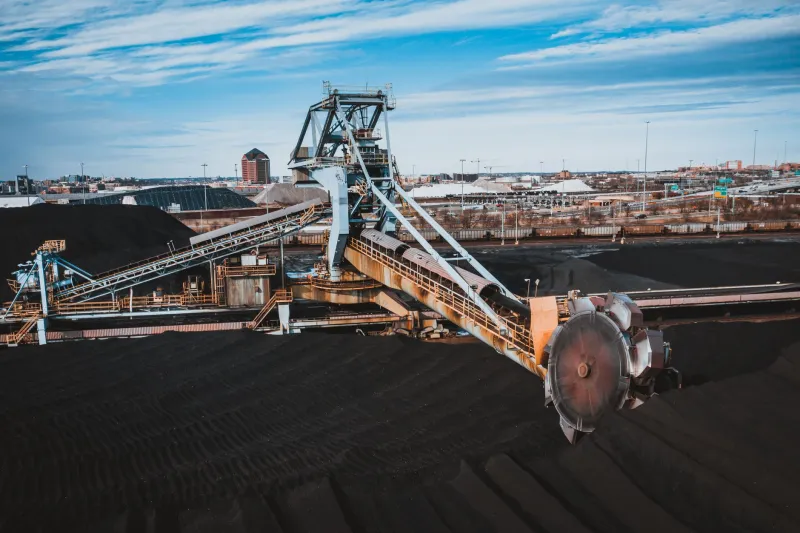
There is a peculiar irony embedded in today's energy equity markets. Companies generating substantial free cash flow, carrying manageable debt loads, and returning capital to shareholders through dividends and buybacks are being systematically valued as though their business models have already failed. These are not speculative startups burning through investor capital. They are established thermal coal producers operating mines across Appalachia, the Illinois Basin, and the Powder River Basin — and Wall Street, by and large, has decided it would rather not discuss them.
That reluctance has created one of the more unusual valuation anomalies in the domestic equity market. For investors willing to examine the numbers without ideological interference, the case for a closer look is compelling.
The Arithmetic of Institutional Avoidance
Begin with the raw valuation data. Major thermal coal producers have, over the past several years, traded at price-to-cash-flow multiples that range from roughly two to five times — a range that would be considered deeply distressed in almost any other energy subsector. Comparable natural gas producers, offshore drillers, and even some downstream refining companies routinely command multiples two to three times higher, despite generating comparable or sometimes inferior cash flow profiles.
The explanation most frequently offered is ESG-driven fund exclusion. Large institutional asset managers — pension funds, university endowments, sovereign wealth funds, and the index-tracking vehicles that dominate American equity ownership — have adopted screening criteria that explicitly prohibit coal equity holdings. When that much institutional capital is structurally barred from participating in a market, price discovery breaks down. Sellers remain, but a critical category of buyers has been removed by mandate rather than by financial logic.
The result is a market where valuation reflects policy preference rather than underlying business performance. That distinction matters enormously to investors operating outside those institutional constraints.
Sentiment Versus Statements
Wall Street analyst coverage of thermal coal companies has thinned considerably over the past decade. Several major brokerages have quietly discontinued coverage of coal equities, citing ESG alignment policies or simply the commercial reality that institutional clients who might act on such research have self-selected out of the sector. What coverage remains tends toward cautious neutrality at best.
Yet the financial statements of leading thermal coal producers tell a different story. Companies such as Arch Resources, CONSOL Energy, and Alliance Resource Partners have, in various recent periods, reported operating margins, return on invested capital figures, and free cash flow yields that would be celebrated loudly if they appeared in a technology or consumer staples company. The gap between the narrative and the numbers is not subtle.
This divergence between sentiment and financial reality is precisely the environment in which disciplined value investors have historically found their most productive opportunities. When the crowd is institutionally prohibited from participating, the individual investor operating on fundamentals rather than mandate occupies unusually favorable ground.
A Framework for Distinguishing Margin of Safety from Value Trap
Not every cheap stock is a bargain. The thermal coal sector contains genuine value opportunities alongside companies whose discounts are entirely deserved. Separating the two requires a structured analytical approach.
Cash flow durability, not just current cash flow. A producer generating strong cash flow today on the back of elevated thermal coal prices may look entirely different when those prices normalize. Investors should stress-test cash flow projections across a range of API2 and domestic coal price scenarios, paying particular attention to how quickly a company's economics deteriorate as prices decline. Producers with lower-cost operations — particularly those in the Illinois Basin with favorable rail access — tend to demonstrate more resilience across pricing cycles.
Contract coverage and customer concentration. Thermal coal companies that have secured multi-year supply agreements with domestic utilities are in a structurally different position than those relying heavily on spot market sales. Long-term contracted volumes provide cash flow visibility that justifies a higher confidence level in forward estimates. Conversely, heavy exposure to a single utility customer introduces concentration risk that the discount may be accurately reflecting.
Reserve life and capital expenditure requirements. A coal company with a thirty-year reserve life and modest sustaining capital needs is a fundamentally different investment than one facing reserve depletion within a decade while simultaneously requiring heavy equipment replacement. The former offers the possibility of sustained cash return to shareholders; the latter may be quietly consuming capital that will never be recovered.
Balance sheet positioning. Companies that used the commodity price upswings of recent years to aggressively reduce debt and accumulate cash are in a position to weather prolonged price weakness, regulatory headwinds, or demand softness without existential pressure. Those that did not are far more vulnerable to the same conditions.
Shareholder return track record. Perhaps the most telling signal of management quality in a capital-intensive, cyclical industry is how executives have allocated cash during periods of abundance. Producers who returned capital through special dividends, consistent base dividends, and share repurchases — rather than pursuing questionable acquisitions or prestige capital projects — have demonstrated the kind of financial discipline that compounds favorably over time.
The ESG Discount as a Temporary Condition
It is worth examining whether the institutional exclusion driving these valuations is permanent or subject to revision. The honest answer is that nobody knows with certainty. ESG mandates have proven durable in many institutional contexts, and there is no compelling evidence that major pension funds or endowments are preparing to reverse their coal exclusion policies.
However, several dynamics complicate the assumption of permanence. Domestic power grid reliability concerns have prompted renewed policy interest in dispatchable baseload generation, of which coal-fired capacity remains a meaningful component in many regions. Export demand for American thermal coal — particularly from Southeast Asian markets — has remained more resilient than early projections suggested. And the financial pressure on institutions to deliver returns, not merely to satisfy ESG criteria, creates a latent tension that could eventually influence how managers weight sectoral exclusions.
For investors, the relevant question is not whether the ESG discount will disappear entirely, but whether a company can generate sufficient cash return during the period of discount to compensate for the risk. In several current cases, the math suggests the answer is yes.
What the Discount Is — and Is Not — Telling You
A thermal coal stock trading at three times cash flow is not automatically a buy. But neither is it automatically a reflection of financial distress or impending obsolescence. In many instances, it reflects the mechanical consequence of removing a large class of institutional buyers from the market — a condition that creates genuine opportunity for investors who do their homework.
The analytical task is to determine, company by company, whether the discount embeds a margin of safety sufficient to compensate for the real risks that do exist: regulatory uncertainty, long-term demand erosion, environmental liability exposure, and the general illiquidity premium that attaches to stocks with thin institutional sponsorship.
When that analysis is done rigorously, some thermal coal producers emerge as among the more attractively priced cash-generating businesses available to American equity investors today. They are hiding in plain sight — priced as though the market has already written them off, while quietly depositing cash into shareholder accounts each quarter.
That is not a guarantee of investment success. But it is, at minimum, a conversation worth having.