Clean Coal, Cleaner Margins: How Preparation Plant Economics Reveal the True Quality of a Coal Investment
When analysts discuss coal company performance, the conversation almost always gravitates toward tons produced, tons sold, and prevailing spot prices. These are the metrics that dominate earnings calls, fill investor presentations, and drive most of the trading activity in coal equities. Yet experienced sector observers understand that some of the most consequential variables in coal investing sit not at the mine face, but several steps downstream — inside the preparation plants where raw extraction becomes a marketable, premium-priced product.
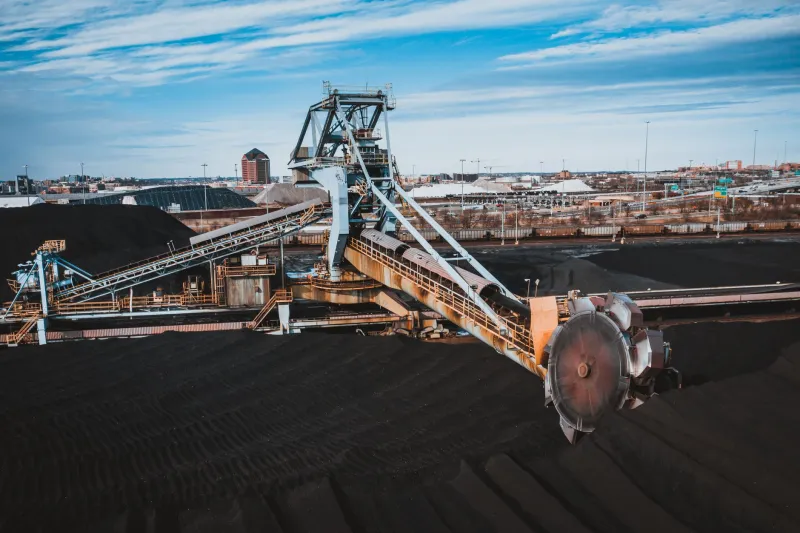
Coal preparation, colloquially known as coal washing, is the process by which freshly mined material is cleaned of impurities, sorted by size and density, and transformed from raw run-of-mine output into a specification-grade product that utilities and steel mills are willing to pay top dollar to receive. For investors evaluating coal equities, understanding how a company's preparation infrastructure functions — and what it costs to operate — is not an optional analytical exercise. It is a foundational requirement for accurate valuation.
What a Wash Plant Actually Does for a Producer's Bottom Line
At its most basic, a coal preparation plant removes ash, sulfur, and other unwanted material from mined coal through a series of water-based separation processes. The result is a product with measurably higher energy content, lower moisture, and reduced emissions-producing compounds. Customers pay meaningfully more for this cleaned coal than they would for raw, unprocessed material — and in many cases, raw coal simply cannot meet the contractual quality specifications that buyers require.
The spread between raw run-of-mine coal and cleaned, specification-grade coal can be substantial. Depending on the seam's natural characteristics and the preparation plant's technical capabilities, a producer may realize anywhere from a few dollars to more than fifteen dollars per ton in additional value simply by running material through an effective wash plant. For a mid-sized producer moving several million tons annually, that differential translates into tens of millions of dollars in incremental revenue that would otherwise never appear in the financial statements.
Equally important is the yield question. Preparation plants do not produce cleaned coal from every pound of raw material that enters them. A portion of the input — the refuse, or reject material — is separated out and disposed of. The ratio of clean coal output to raw input is called the yield, and it varies considerably based on the quality of the seam, the sophistication of the equipment, and the targeted product specification. A producer with a high-yield preparation plant operating on a naturally clean seam occupies a fundamentally different cost position than one running aging equipment on a high-ash deposit.
Ownership Structure: A Detail That Changes Everything
Not every coal producer owns its own preparation facilities outright. Some companies operate their own plants, while others rely on third-party processing arrangements — paying a toll to have their coal cleaned by an outside operator. This distinction carries significant implications for investors assessing competitive positioning and margin resilience.
Producers who own and control their preparation infrastructure enjoy several structural advantages. They can prioritize their own tonnage, optimize processing schedules for market conditions, and avoid the variability of third-party pricing. They also retain the option to process coal for neighboring operations on a toll basis, generating ancillary revenue that improves asset utilization. During periods of high demand, this control can mean the difference between capturing a price rally and being throttled by processing constraints.
By contrast, producers dependent on tolling arrangements face a different risk profile. Their realized margins are partially determined by contract terms they did not write, and their operational flexibility is constrained by another party's priorities and capacity. In a tight market, third-party processing access may become a genuine bottleneck. Investors should examine the notes to financial statements carefully, as tolling costs are frequently buried in cost-of-sales figures rather than broken out as a discrete line item.
Technology Vintage and Capital Intensity
Coal preparation technology has advanced considerably over the past three decades. Modern plants equipped with dense medium vessels, froth flotation circuits, and sophisticated fine-coal recovery systems can achieve higher yields and better product quality than older installations relying on simpler gravity separation methods. The gap in performance between a recently upgraded facility and one running 1980s-era equipment is not merely technical — it has direct financial consequences.
Older plants tend to carry higher operating costs per ton and often sacrifice more material to the refuse pile due to less precise separation. They may also struggle to consistently hit tighter product specifications that premium customers increasingly demand. Conversely, companies that have invested in modernizing their preparation infrastructure — even when doing so required significant capital expenditure — frequently emerge with lower unit costs and stronger customer relationships.
For investors, this creates an important analytical task: distinguishing between capital expenditure that is genuinely value-creating and spending that merely maintains the status quo. A company that directs capital toward preparation plant upgrades is often making a more durable investment than one that simply sinks money into mining equipment at a seam that will be exhausted within a decade.
Reading the Signals in Financial Disclosures
Most publicly traded coal producers provide limited direct disclosure about their preparation plant assets. Investors must often work from indirect signals — depreciation schedules, capital expenditure breakdowns, realized price versus benchmark price comparisons, and product specification data where available. The difference between a company's average realized price and the prevailing spot benchmark for comparable coal grades is one of the most revealing indicators of preparation quality. A producer consistently realizing premiums to benchmark likely has excellent processing capabilities. One that persistently underperforms benchmark pricing may be struggling with preparation constraints or selling lower-specification material.
Operating cost per clean ton is another metric worth scrutinizing. Companies with efficient, well-maintained preparation infrastructure typically demonstrate lower and more stable processing costs, which in turn support more predictable margins across the commodity price cycle. Volatility in per-ton operating costs — particularly in segments described as processing or preparation — can be an early warning sign of aging equipment or operational difficulties.
The Competitive Moat That Rarely Gets Named
In an industry where investors spend considerable energy debating reserve quality, rail access, and export terminal positions, preparation plant infrastructure rarely receives the attention it deserves. Yet for producers operating in competitive basins — particularly in Central Appalachia, where seam characteristics vary widely and product specifications are demanding — preparation capability can function as a genuine competitive moat.
A coal company that owns modern, high-capacity wash plants, operates them efficiently, and consistently delivers specification-grade product to quality-sensitive customers occupies a fundamentally stronger market position than its raw tonnage figures suggest. Conversely, a producer whose headline production numbers look impressive but whose preparation infrastructure is inadequate or aging may be delivering far less value per ton than the output statistics imply.
For investors committed to rigorous coal sector analysis, the wash plant is not a back-office detail. It is, in many cases, the most consequential piece of infrastructure a producer owns — and the one most likely to determine whether a coal equity ultimately delivers on its apparent promise.