Buried Obligations: Why Reclamation Liabilities Are the Coal Investor's Most Dangerous Blind Spot
Buried Obligations: Why Reclamation Liabilities Are the Coal Investor's Most Dangerous Blind Spot
There is a particular kind of financial risk that does not announce itself in quarterly earnings calls or show up in the metrics most coal investors track religiously. It accumulates quietly, often over decades, and it has the capacity to transform what looks like a well-capitalized coal producer into a company with deeply impaired solvency. Mine reclamation liability — the legally mandated obligation to restore mined land to an acceptable environmental condition — is that risk, and far too many investors treat it as a footnote rather than a foundational variable.
For anyone holding positions in U.S. coal equities, or evaluating new entries in the sector, developing a rigorous approach to reclamation liability analysis is not a matter of environmental advocacy. It is a matter of protecting capital.
What Reclamation Liability Actually Represents
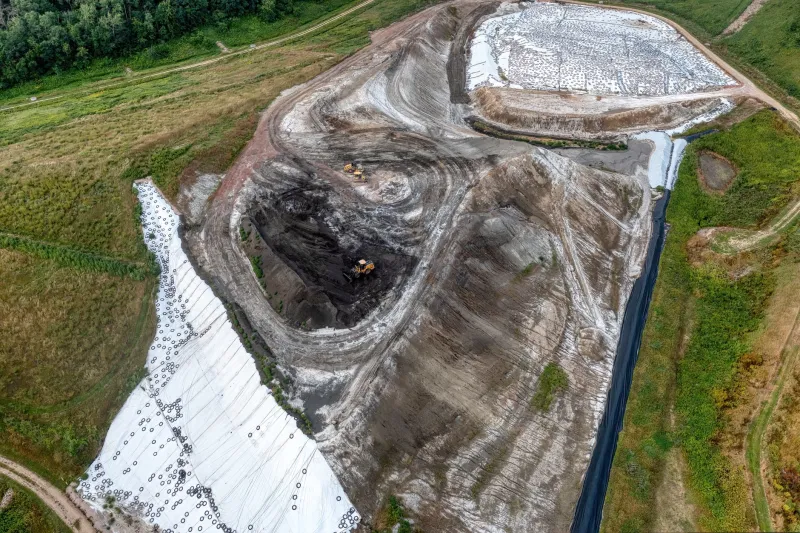
Under the Surface Mining Control and Reclamation Act of 1977 (SMCRA), coal producers operating in the United States are legally required to restore mined land to a condition that approximates its pre-mining topography and ecological function. This encompasses grading and revegetating disturbed land, treating acid mine drainage, removing infrastructure, and in some cases managing water quality for years after mining operations cease.
The financial obligation attached to these requirements is recorded on a company's balance sheet as an Asset Retirement Obligation, commonly abbreviated as ARO. In theory, this figure represents the present value of all future reclamation costs the company expects to incur. In practice, it is one of the most subjectively estimated line items in any coal producer's financial statements, and the assumptions embedded in it can vary dramatically from one company to the next.
Cost estimates depend on discount rates, projected labor and materials costs, regulatory assumptions, and the anticipated timeline for mine closure. Adjust any one of those variables, and the ARO figure can shift materially. This subjectivity creates significant room for optimistic accounting — and significant risk for investors who accept the stated figure at face value.
Where to Find the Numbers — and What to Look For
The ARO is typically disclosed in two places: on the balance sheet itself, usually as a non-current liability, and in the notes to the financial statements, where companies are required to provide a rollforward of the obligation and disclose the key assumptions underlying their estimates.
Begin with the notes. A company that discloses its discount rate, its inflation assumption for future costs, and its expected closure timeline is giving you the raw material to stress-test their figures. A company that provides minimal detail is, at minimum, offering you a reason to be cautious.
Next, compare the stated ARO against the company's bonding position. Under SMCRA and parallel state regulations, coal producers must post financial assurance — typically through surety bonds, letters of credit, or self-bonding arrangements — to guarantee that reclamation will be funded even in the event of bankruptcy. If a company's bonding coverage falls short of its stated ARO, that gap represents unfunded exposure that creditors and regulators will eventually move to address.
Self-bonding deserves particular scrutiny. Several states permit financially strong coal companies to self-bond — essentially pledging their own balance sheet rather than purchasing third-party surety. This arrangement is only as sound as the company's financial health, and during periods of industry stress, self-bonded obligations can become a systemic concern. The bankruptcies of several major Appalachian producers in the mid-2010s exposed the fragility of self-bonding arrangements and left state reclamation programs scrambling to cover shortfalls. Investors evaluating current coal stocks should verify whether self-bonding is in use and assess the regulatory risk that comes with it.
Comparing Reclamation Exposure Across Producers
Raw ARO figures are difficult to compare across companies of different sizes and operational footprints. A more useful metric is reclamation liability per ton of remaining reserves, or reclamation liability as a percentage of total equity. These normalized figures allow for more meaningful peer comparisons and can reveal whether a company's stated obligations look proportionate to its operational scale.
Appalachian producers, particularly those operating older underground mines and surface operations in Kentucky, West Virginia, and Virginia, tend to carry heavier reclamation burdens per ton than producers in the Powder River Basin of Wyoming and Montana. The geology, hydrology, and regulatory environment of Central Appalachia create more complex restoration challenges, and the legacy of generations of mining means that some companies are managing obligations tied to operations that ceased years ago.
Illinois Basin producers generally fall somewhere in between, though the region's relatively flat terrain and productive agricultural land base can create its own set of reclamation expectations.
When comparing producers, also examine the pace at which reclamation obligations are accreting. Under accounting standards, AROs grow each period through an accretion charge that reflects the passage of time. If a company's ARO is growing faster than its production base or cash flow, that trajectory warrants investigation.
The Regulatory Dimension That Balance Sheets Cannot Fully Capture
Beyond the accounting figures, reclamation liability carries a regulatory dimension that does not appear anywhere on a balance sheet. State mining regulators and the federal Office of Surface Mining Reclamation and Enforcement (OSMRE) have broad authority to require additional bonding, restrict new permit issuance, or mandate accelerated reclamation at operations they deem underfunded or environmentally problematic.
For an investor, this regulatory exposure translates into operational risk. A producer that receives a permit suspension due to inadequate bonding cannot expand or open new mines until the deficiency is resolved. In a sector where production flexibility and reserve development are critical to long-term value, that constraint can be genuinely damaging.
Pay attention to regulatory filings, state enforcement actions, and any mention of permit disputes in a company's SEC disclosures. These signals often precede financial disclosures that confirm what the regulatory record already suggested.
Building a Practical Stress-Test Framework
A rigorous approach to reclamation liability analysis involves several discrete steps. First, extract the stated ARO from the balance sheet and the supporting notes, noting all key assumptions. Second, apply a sensitivity analysis by adjusting the discount rate downward — a lower discount rate increases the present value of future obligations and represents a more conservative estimate. Third, verify the company's bonding position against the ARO and identify any self-bonding exposure. Fourth, normalize the liability against reserves, equity, and operating cash flow to assess proportionality. Fifth, review the regulatory record for any open enforcement actions or permit disputes.
This framework will not eliminate uncertainty — reclamation accounting is inherently imprecise — but it will sharpen your understanding of the range of outcomes embedded in any coal equity position.
The Bottom Line for Coal Investors
The coal sector rewards investors who look past headline earnings and into the structural characteristics that determine long-term viability. Reclamation liability is among the most consequential of those characteristics, and it is also among the most neglected. Companies that have managed their bonding obligations conservatively, maintained transparent disclosure practices, and avoided self-bonding arrangements in jurisdictions that still permit it represent meaningfully lower risk profiles than peers who have deferred or minimized these commitments.
The investors who have been caught off guard by reclamation-related financial distress in the past were not necessarily uninformed about the coal industry. They simply failed to treat the cleanup obligation as a first-order financial variable. In a sector navigating long-term structural headwinds, that oversight is a luxury no serious investor can afford.