Port Access Is the New Moat: Why Export Infrastructure Should Drive Your Coal Stock Picks
The Variable Most Investors Aren't Watching
When retail investors evaluate a coal producer, the checklist tends to look familiar: proven reserves, all-in production costs, debt load, and dividend history. These are sensible metrics. They are also incomplete ones. What that checklist rarely captures is the distance — physical, contractual, and financial — between a company's mine mouth and a functioning export terminal.
That distance is now mattering more than at any point in the past decade. Global seaborne coal demand, particularly across Southeast Asia, India, and select European markets still managing their own energy transitions, has created a sustained appetite for American coal exports. The producers positioned to serve that demand efficiently are not simply the ones sitting atop the largest reserves. They are the ones with privileged access to the ports that move product to paying customers.
Gulf Coast and East Coast: Two Corridors, Two Competitive Dynamics
U.S. coal export infrastructure is concentrated along two primary coastal corridors, each serving different mining regions and carrying distinct logistical characteristics.
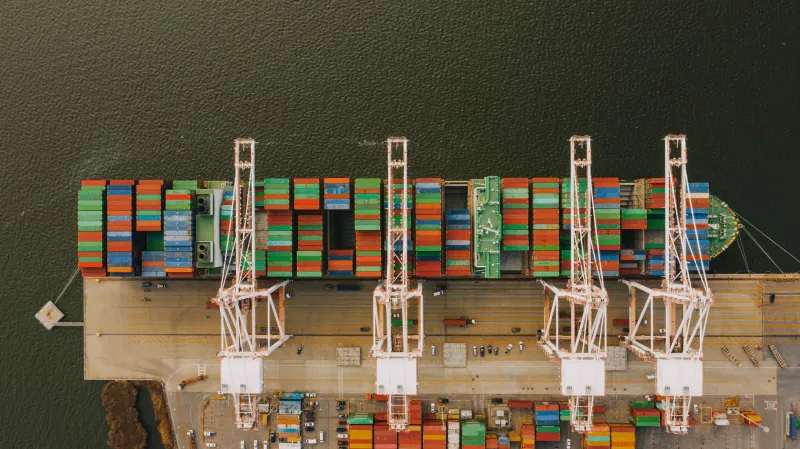
The Gulf Coast — anchored by terminals in Louisiana and Texas — has historically served Illinois Basin producers and, increasingly, certain Appalachian operations. Deepwater capacity at facilities like the Convent Marine Terminal in Louisiana enables efficient loading of Panamax and Capesize vessels, which are essential for cost-competitive delivery to Asian markets. Producers with long-term throughput agreements at these facilities carry a meaningful structural advantage: predictable export costs and loading priority that smaller competitors simply cannot replicate on the spot market.
The East Coast corridor, centered on Norfolk, Virginia, and the Hampton Roads complex — one of the highest-volume coal export hubs in the Western Hemisphere — primarily serves Central and Southern Appalachian producers. Companies with rail agreements and terminal access through Norfolk Southern and CSX networks into Hampton Roads enjoy a logistical pipeline that is exceptionally difficult to replicate. Proximity to this infrastructure has historically translated into lower export freight costs and faster inventory turnover, both of which show up favorably in per-ton margins.
How Terminal Access Translates Into Margin Resilience
The margin advantage conferred by export infrastructure access is most visible when domestic demand softens. When U.S. utility coal consumption dips — whether due to natural gas price competition, mild weather, or renewable generation gains — producers without viable export channels face a binary choice: cut production or accept discounted domestic pricing. Neither outcome is attractive for shareholders.
Producers with established export relationships face a materially different decision tree. They can redirect tonnage to seaborne markets, capturing international benchmark pricing rather than accepting domestic spot discounts. This optionality functions as a natural hedge, smoothing revenue curves across demand cycles in ways that purely domestic-focused producers cannot replicate.
Consider the practical arithmetic: a Central Appalachian metallurgical and thermal coal producer with a committed throughput agreement at a Hampton Roads terminal can export product to European or Indian buyers at prices that may exceed domestic utility contract rates by a meaningful margin — particularly during periods of global supply tightness. That flexibility is worth considerably more than it appears on a static balance sheet review.
Publicly Traded Names Worth Examining Through This Lens
Several publicly traded coal companies warrant closer scrutiny specifically through the lens of export infrastructure positioning.
Alpha Metallurgical Resources, which focuses on metallurgical coal from Virginia and West Virginia operations, benefits from geographic proximity to Hampton Roads and has historically maintained export-oriented sales strategies. A meaningful share of its revenue derives from international shipments, which provides the margin diversification discussed above.
ARCH Resources similarly maintains a significant export component in its metallurgical coal business, with established seaborne customer relationships that insulate a portion of its revenue from purely domestic demand fluctuations.
Consol Energy operates with a more integrated approach, owning the Baltimore terminal infrastructure that handles a portion of its export volume — a structural advantage that eliminates third-party terminal dependency and provides direct control over throughput costs.
Naturally, investors should conduct thorough due diligence on current terminal agreements, shipping contract terms, and any capital expenditure commitments tied to port access before drawing firm conclusions. Terminal agreements expire, rail contracts are renegotiated, and infrastructure capacity can shift with port expansions or consolidations.
The Screening Blind Spot That Creates Opportunity
The reason export infrastructure remains underweighted in most retail investor analysis is straightforward: it does not appear cleanly on a standard financial screening dashboard. You will not find a "terminal access score" on a stock screener. The relevant information is buried in 10-K filings, in the logistics and transportation footnotes, in earnings call commentary about export mix, and in the geographic detail of sales breakdowns.
That obscurity is, in one respect, an opportunity. Markets price what they measure. When a relevant competitive variable goes unmeasured by the majority of market participants, it tends to go unpriced. Investors willing to do the deeper reading — parsing annual reports for export volume percentages, customer geography disclosures, and throughput agreement terms — may identify producers whose margin durability is systematically undervalued relative to peers.
A Framework for Incorporating Export Access Into Your Analysis
For investors looking to incorporate this variable into their coal stock evaluation process, a practical framework might include the following steps.
First, identify the percentage of each producer's annual tonnage sold into export markets versus domestic customers. Companies with export volumes consistently above 30 to 40 percent of total sales are demonstrating that international market access is operational, not aspirational.
Second, examine the specificity of export infrastructure references in annual filings. Vague references to "export opportunities" carry far less weight than disclosed throughput agreements with named terminals and contracted capacity volumes.
Third, assess rail network dependency. A producer with strong terminal proximity but a single-rail-carrier dependency for getting product to port carries concentration risk that partially offsets the terminal advantage.
Finally, compare export-adjusted realizations per ton across peer companies. If a producer is consistently capturing higher per-ton revenue than its reserve-quality peers would suggest, export channel efficiency is often a contributing explanation.
The Quiet Differentiator in Plain Sight
The coal sector is not a monolith, and the companies that will generate the most durable shareholder returns over the coming years are unlikely to be those with the most coal in the ground. They are more likely to be the ones that can move that coal to the highest-value buyer, wherever in the world that buyer happens to be.
Export terminal access is the infrastructure that makes that possible. It is also the competitive moat that most investors are not yet measuring. In a sector where differentiation is difficult and margin compression is a persistent threat, that oversight may represent one of the more underappreciated analytical edges available to the patient, detail-oriented investor.