Same Tonnage, Different Story: How Basin Geography Rewrites the Coal Investment Thesis
Volume figures in a coal company's earnings release can be deeply misleading. Two producers shipping twenty million tons annually may share almost nothing else in common—not their cost structures, not their customer bases, not their regulatory exposure, and certainly not their margin profiles. The variable that explains most of these divergences is one that rarely appears prominently in investor presentations: the geological basin from which the coal is extracted.
America's four primary coal-producing regions each possess a distinct set of physical characteristics that flow directly into financial outcomes. For investors conducting serious due diligence on coal equities, mastering these basin-level distinctions is the analytical foundation upon which every other judgment must rest.
The Powder River Basin: Scale as Both Shield and Constraint
The Powder River Basin (PRB), stretching across northeastern Wyoming and a sliver of southeastern Montana, is the nation's single largest coal-producing region by tonnage. The coal extracted here is sub-bituminous in rank, meaning it carries a lower heat content—typically between 8,400 and 8,800 British thermal units per pound—compared to eastern coals. It also contains significant moisture, sometimes exceeding 25 percent by weight.
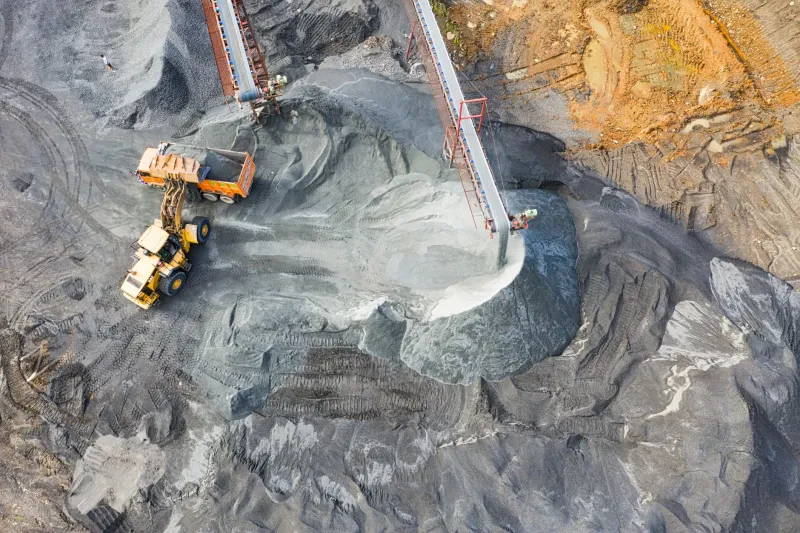
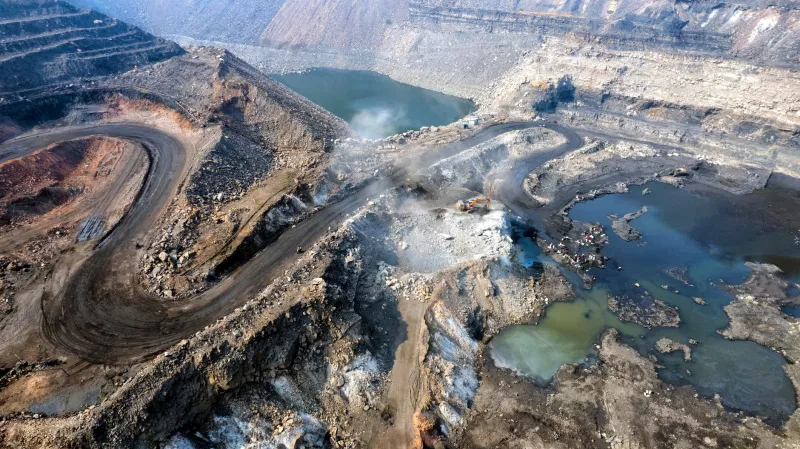
These physical properties create a specific economic reality. PRB coal sells at a substantial per-ton discount to higher-ranked coals, yet its extraordinary seam thickness—some deposits exceed 100 feet—enables surface mining operations of remarkable efficiency. Companies operating in this basin compete almost entirely on cost and logistics. Rail access to western utilities is the defining competitive variable, and operators with favorable rail contracts and proximity to generating stations maintain durable advantages.
For investors, PRB producers generally offer high-volume, lower-margin exposure. The investment case rests on operational scale and transportation efficiency rather than product premium. When utility demand softens, PRB operators feel it quickly because their coal serves a commodity function with limited pricing power. Conversely, when natural gas prices rise and power generators seek cheaper fuel alternatives, PRB coal's cost advantage becomes pronounced.
The Illinois Basin: A Sulfur Story With a Modern Ending
The Illinois Basin spans southern Illinois, western Kentucky, and southwestern Indiana. Its coal is bituminous in rank, with heat content ranging from roughly 10,500 to 11,500 BTUs per pound—meaningfully higher than PRB coal. The complication has historically been sulfur content, which can run considerably elevated relative to Appalachian coals.
For decades, high sulfur levels constrained Illinois Basin coal's addressable market, as utilities without scrubber equipment could not burn it without violating Clean Air Act emission standards. That calculus shifted materially as scrubber installation expanded across the utility fleet. Today, Illinois Basin coal reaches a broader set of customers, and its combination of competitive mining costs—largely surface and longwall underground operations—with solid heat content gives basin operators a compelling cost-per-BTU proposition.
Investors evaluating Illinois Basin producers should scrutinize which utilities their customers operate and whether those plants carry scrubber infrastructure. A producer whose contracts are concentrated among unscrubbed facilities carries regulatory and demand risk that a peer serving scrubber-equipped plants does not. This distinction rarely appears in headline tonnage figures but materially separates investment quality within the basin.
Central Appalachia: Premium Product, Structural Headwinds
Central Appalachia—encompassing southern West Virginia, eastern Kentucky, and southwestern Virginia—once stood as the crown jewel of American coal production. Its high-volatile and low-volatile bituminous coals offer heat content exceeding 12,000 BTUs per pound in many seams, with low sulfur and low ash characteristics that make them desirable for both power generation and metallurgical applications.
The geological problem is that the most accessible seams have largely been mined. Remaining reserves in Central Appalachia often require deeper underground operations, thinner seam mining, or more complex surface configurations. These factors drive operating costs higher than in competing basins, and the region's mountainous terrain adds logistical complexity.
For investors, Central Appalachian producers present a nuanced picture. Those with meaningful metallurgical coal exposure—coking coal used in steelmaking—command premium pricing that can justify higher production costs and generate strong free cash flow during periods of robust global steel demand. Pure thermal producers in the region face a more difficult structural argument, as their cost disadvantage relative to PRB and Illinois Basin coal becomes increasingly difficult to overcome when utility customers have options.
The investment discipline required here is separating met coal exposure from thermal coal exposure within individual company portfolios. A Central Appalachian operator with 60 percent metallurgical production is a categorically different investment from one selling primarily into domestic power markets.
The Uinta Basin: A Niche With Specific Appeal
Utah's Uinta Basin occupies a smaller but strategically interesting position in the national coal landscape. Its bituminous coal carries high heat content—often approaching 11,500 BTUs per pound—with moderate sulfur and low ash. Mining occurs predominantly underground, which limits the scale advantages available in surface-dominated basins but also insulates operators somewhat from the surface-mining cost pressures that have intensified regulatory scrutiny elsewhere.
Uinta Basin producers have historically benefited from export access through West Coast ports, giving them exposure to Asian electricity markets that PRB and eastern producers cannot easily reach. This export optionality introduces a different risk profile—one tied to Pacific Basin demand dynamics, shipping economics, and international pricing benchmarks rather than purely domestic utility contracting cycles.
For investors seeking diversification within coal equity exposure, Uinta Basin operators offer a distinct demand geography. When domestic utility demand contracts, a producer with established export relationships can partially offset volume losses through international channels. That flexibility carries value that pure domestic producers cannot replicate.
Reading the Basin Map as a Financial Document
The practical implication for investors is that basin identification should precede almost every other analytical step when evaluating coal equities. Before examining a company's balance sheet leverage or dividend sustainability, an investor should understand where its production originates and what that geology means for cost structure, customer type, and pricing power.
A useful discipline is to reconstruct a company's per-ton economics by basin rather than accepting consolidated figures. Companies operating across multiple basins—several of the larger publicly traded coal producers do—will blend results in ways that can obscure both strengths and vulnerabilities. Disaggregating by basin often reveals that a company's reported margins are being carried by one segment while another quietly erodes.
The coal equity market rewards investors who understand that the ground beneath a mine is not merely a source of fuel—it is the primary determinant of whether that mine's operator represents a durable income-generating enterprise or a capital trap dressed in strong tonnage numbers. The geological atlas of American coal is, for those willing to read it carefully, one of the most reliable financial documents available in this sector.