From Courtroom to Comeback: How Chapter 11 Reshapes Coal Companies Into Leaner Investment Opportunities

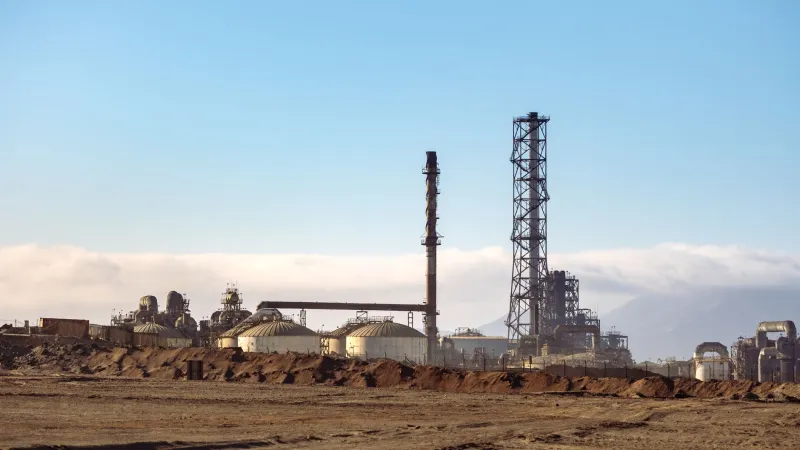
Photo by Photo by Lachlan on Unsplash on Unsplash
For most retail investors, the word "bankruptcy" in a headline triggers an immediate exit from the conversation. In the coal sector, that reflexive avoidance has historically cost those same investors meaningful returns. A careful review of Chapter 11 proceedings among U.S. coal operators over the past two decades reveals a recurring pattern: companies that enter bankruptcy encumbered by pension obligations, above-market labor contracts, and poorly structured debt frequently emerge as operationally superior businesses—leaner, better capitalized, and positioned to generate cash flow that their pre-bankruptcy selves never could.
This is not an argument for reckless speculation in distressed coal equities. It is, rather, a call for analytical discipline at a moment when most market participants are looking the other way.
Why Coal and Chapter 11 Have Such a Long History
The coal industry's relationship with bankruptcy protection is structural, not coincidental. The sector carries legacy costs that few other industries match—multi-decade pension and retiree healthcare obligations negotiated during periods of union strength, environmental reclamation bonds tied to mines that have long since ceased production, and debt loads accumulated during commodity price booms that proved unsustainable when markets corrected.
When coal prices fell sharply between 2012 and 2016, a wave of high-profile Chapter 11 filings swept through the industry. Alpha Natural Resources, Arch Coal, Foresight Energy, and Walter Energy all sought protection during that window. What followed those filings is the part of the story that receives far less attention than the filings themselves.
The Liability Shedding Mechanism
Chapter 11 is, at its core, a legal framework for renegotiating obligations that have become structurally incompatible with a company's revenue base. For coal operators, the most consequential categories of liability reduction typically fall into three areas.
Pension and retiree benefit obligations represent perhaps the most significant legacy burden on mature coal operators. Under Section 1114 of the Bankruptcy Code, companies can petition to modify retiree benefit obligations with court approval—a process that, while contested, has allowed several operators to substantially reduce their long-term cost structures.
Labor contract renegotiation under Section 1113 provides a parallel mechanism for addressing above-market collective bargaining agreements. When an operator emerges from bankruptcy with revised labor terms, the per-ton cost differential can be material enough to shift the company's competitive position within its basin.
Debt restructuring is perhaps the most visible transformation. Companies that enter bankruptcy carrying debt at double-digit interest rates frequently emerge with either equity-converted obligations or fresh credit facilities at rates that reflect the company's reorganized—rather than distressed—profile. The reduction in annual interest expense alone can convert a cash-flow-negative operation into a cash-flow-positive one without any change in production volume or pricing.
Tracking the Post-Emergence Performance Record
Arch Coal's 2016 emergence from bankruptcy offers one of the more instructive case studies available to U.S. investors. The company entered Chapter 11 in January 2016 carrying approximately $6.6 billion in debt. It emerged that October with a dramatically simplified balance sheet, a reduced cost structure, and a renewed focus on its highest-margin metallurgical coal assets in Appalachia and the Powder River Basin.
Investors who recognized the transformation early and acquired shares in the reorganized entity—which eventually became Arch Resources—participated in a multi-year appreciation cycle that the pre-bankruptcy shareholder base never had the opportunity to experience. The company's subsequent dividend capacity and share buyback programs were direct descendants of the restructuring discipline imposed during the Chapter 11 process.
Alpha Natural Resources followed a similar trajectory under its reorganized identity. The operational footprint that survived restructuring was, by design, the most economically durable portion of the original enterprise.
Identifying the Next Restructuring Candidate
For investors willing to apply analytical rigor rather than headline-driven avoidance, several financial indicators have historically preceded coal sector Chapter 11 filings—and, more importantly, have preceded the subsequent recoveries.
Debt-to-EBITDA ratios above 5x in a sustained low-price environment are a consistent precursor signal. When that ratio is accompanied by near-term debt maturities and covenant structures that limit operational flexibility, the probability of a restructuring filing increases substantially.
Pension liability relative to enterprise value is a second metric worth monitoring. When unfunded pension obligations approach or exceed the company's market capitalization, the economic logic of a restructuring that addresses those obligations becomes difficult to ignore from a board-level perspective.
Management tone in earnings calls and SEC filings also shifts in detectable ways ahead of restructuring decisions. Language around "liquidity management," "strategic alternatives," and engagement with creditor committees tends to cluster in the quarters preceding a filing.
The Timing Challenge and How to Manage It
The principal risk in pursuing post-restructuring coal equity opportunities is timing. The period between a Chapter 11 filing and emergence can span anywhere from several months to multiple years, during which the pre-reorganization equity is typically worthless. The investment opportunity generally presents itself at or after emergence, when the reorganized entity issues new shares—often distributed to former creditors—and begins trading.
Monitoring the claims trading market and the terms of a proposed Plan of Reorganization can provide sophisticated investors with advance insight into the valuation at which reorganized equity is likely to emerge. When the reorganization plan implies an enterprise value that appears conservative relative to the company's forward cash flow potential, the window between emergence and broader market recognition can be meaningful.
A Framework for Disciplined Engagement
Not every coal bankruptcy produces a compelling post-emergence investment. Companies restructuring in the face of permanently impaired asset bases—mines with exhausted reserves, operations in structurally disadvantaged basins, or businesses dependent on utility contracts unlikely to be renewed—may emerge technically solvent but operationally uncompetitive.
The distinguishing question is whether the restructuring addresses financial obligations that were incompatible with the business, or whether it merely delays a fundamental demand problem that no amount of debt reduction can solve. That distinction requires a thorough review of the company's reserve base, its customer contract profile, its basin-level cost competitiveness, and the regulatory trajectory affecting its specific operational footprint.
Investors who apply that framework consistently will find that the coal sector's bankruptcy history contains not just cautionary tales, but some of the more compelling recovery stories in American industrial finance. The market's aversion to the word "bankruptcy" is, in this sector, a persistent source of mispricing—and for the prepared investor, that mispricing represents opportunity.